Word Puzzle - Crossword Games
People Lovin GamesWord
4.5128.00 Reviews
- Version
- 2.7
- Installs
- 100.00K
- Age Rating
- Everyone
Screenshots
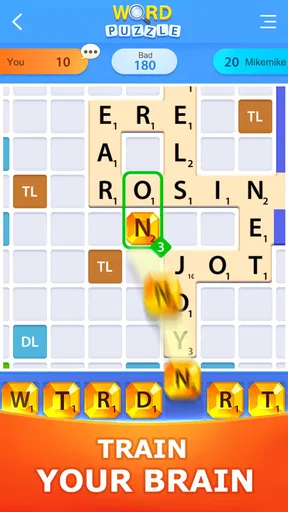
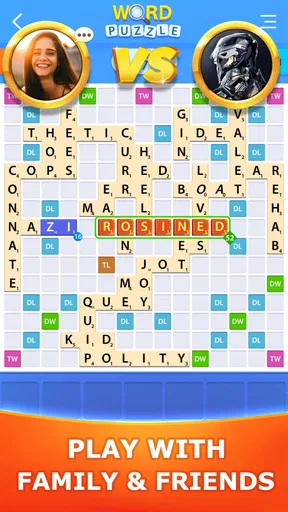
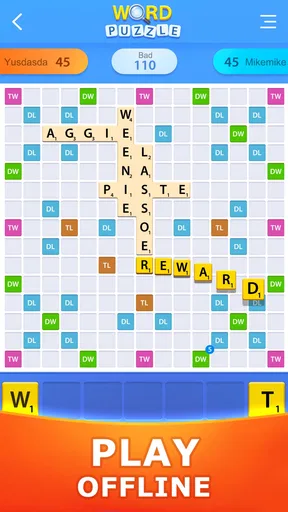
Our Review of Word Puzzle - Crossword Games
 Analysis by Appyee
I approached Word Puzzle - Crossword Games as the kind of game I could open for a few quiet minutes rather than something demanding a long session. It is a free word game from People Lovin Games, built around crossword-style puzzles and the simple pleasure of finding the answer that has been sitting just outside your vocabulary. The appeal is immediate: read a clue, think through possible words, place the letters, and keep moving.
That simplicity is also the main reason it works. I did not need to learn a complicated control scheme or understand a large set of rules before starting. The game is aimed at Everyone, runs on devices using Android 7.1 or later, and its current version is 2.7. Those details matter because this is an accessible choice for older compatible phones and for players who want a lightweight mental break instead of a visually intense game.
After spending time with it, my impression is positive but specific. This is best understood as a casual crossword companion, not a deep competitive word platform. Its strongest qualities are the quick start, the offline-friendly format, and the way each solved entry gives a small sense of progress. Its weaker side is that players looking for elaborate progression, rich social interaction, or a sharply escalating challenge may eventually find the structure modest.
How the puzzle loop creates early goals
The first goal is pleasantly clear: complete the puzzle in front of you. That sounds obvious, but it gives the game a useful rhythm. I can begin with the clues I recognize, use those answers to reveal crossing letters, and then return to the clues that initially seemed uncertain. This creates a natural chain of small decisions instead of asking me to solve everything in a fixed order.
That approach is especially helpful for casual players. A difficult clue does not necessarily stop the whole board because another answer may provide the letter needed to unlock it. I found myself treating each completed word as a tool for the next one, not merely as a score event. The best early sessions therefore feel like gradual untangling: solve what is familiar, use the result to narrow the possibilities, and revisit the stubborn spaces.
The offline capability is important here. I could imagine using the game during a commute, while waiting for an appointment, or in a place where I would rather not depend on a connection. It also makes the experience feel more self-contained than many modern puzzle games that constantly push online events or social tasks. If your idea of a word game is something you can pick up without preparing a session, this format fits well.
The “with friends” angle is more useful as a shared activity than as a reason to expect a large multiplayer system. I would use it by passing a puzzle to someone nearby, discussing a clue, or comparing how quickly we recognized an answer. That makes the game suitable for a relaxed family challenge or a short contest between friends, but I would not choose it specifically for a sophisticated online word battle.
One practical tip is to avoid attacking the grid from one corner only. I get better results by scanning for the shortest or most obvious answers first, then using their crossing letters to reduce the number of possibilities elsewhere. This is not a flashy strategy, but it makes the early goals feel more manageable and prevents one unfamiliar clue from controlling the entire session.
Why the first few sessions feel approachable
The game’s basic interaction is easy to understand, which lowers the cost of trying it. There is no need to memorize a long list of special rules before the puzzle becomes enjoyable. I can focus on language, spelling, and pattern recognition immediately. That makes it a reasonable choice for someone returning to crossword games after a long break, as well as for a player who wants a gentle introduction to the format.
It also works well in short bursts. A typical use case for me would be opening it during a coffee break, solving part of a grid, and leaving before the session turns into a commitment. The game does not need to replace a full evening hobby to be worthwhile. Its value comes from fitting into the small spaces of an ordinary day while still giving my attention something more satisfying than endlessly scrolling.
There is a trade-off, though. Players who need a strong narrative reason to continue may not find enough motivation in the puzzle loop alone. The early objective is the board itself, and that is both the charm and the limitation. If you want characters, a story campaign, or a large world that changes as you play, this is not the right type of word game.
Progress signals, difficulty, and the pace of returning
In a crossword game, progress is usually felt rather than announced. Every filled space makes the board look less intimidating, and every crossing word confirms whether my reasoning is moving in the right direction. I like that kind of feedback because it rewards understanding rather than demanding constant visual celebration. The satisfaction comes from seeing a clue become solvable because I earned the necessary letters elsewhere.
That progress signal is strongest when I am close to finishing a puzzle. At that point, the remaining blanks become a focused challenge. I can compare possible answers against the letters already placed, notice common endings, and test whether the clue’s wording points toward a particular form. The final stretch often feels more rewarding than the opening because each answer has a visible effect on the rest of the grid.
My advice is to treat the board as a network rather than a collection of isolated questions. When I am stuck, I look for a crossing with several confirmed letters instead of repeatedly rereading the same clue. This turns frustration into a small deduction exercise. It is one of the more useful habits for this particular style of game, especially for players who are tempted to guess too early.
The difficulty curve is best described as gradual and conversational rather than dramatic. The game encourages me to build confidence through familiar vocabulary before confronting less obvious answers. That pace suits relaxed play, and it gives newer players room to develop a method. However, experienced crossword fans may want a more forceful increase in complexity than this kind of casual presentation provides.
That distinction matters when deciding whether to install it. If you want a calming word workout, the measured pace is a strength. If you want a punishing test in which every session feels like a tournament round, the experience may seem too restrained. I would recommend it to someone who values steady solving over pressure, while directing highly competitive players toward a more specialized crossword platform.
The game can still exercise useful skills without pretending to be a formal learning tool. I use it to practice recalling words, spotting letter patterns, and staying patient when the first answer does not come immediately. A parent could also use a puzzle as a casual shared activity with a child who enjoys words, although the Everyone rating should not be mistaken for a guarantee that every clue will suit every reading level.
Where the challenge remains enjoyable
The most enjoyable challenge comes from the balance between recognition and deduction. Some answers arrive quickly, while others require the crossings to reveal their shape. That mixture keeps the board from feeling like a pure vocabulary test. I do not need to know every word at the start; I need to use the information the grid gives me.
One useful workflow is to make a first pass without forcing uncertain answers. I fill the clues I understand, pause at anything that feels speculative, and then return after more letters appear. This reduces careless guesses and makes the later solution feel earned. It also gives the game a natural pacing pattern: quick wins at the beginning, a more thoughtful middle, and a concentrated finish.
The limitation is that the game’s challenge depends heavily on how much variety and depth a player expects from its puzzle structure. A casual audience may appreciate the approachable design, while dedicated solvers can eventually want more control over difficulty or a stronger sense of long-term mastery. I would not call that a flaw in the basic loop, but it does define the audience clearly.
Another point worth considering is the role of hints or assistance in a crossword experience. I prefer to delay any help until I have exhausted the crossings, because looking too soon can remove the most satisfying part of the puzzle. If you tend to use assistance immediately, the game may become shorter and less mentally rewarding. The better approach is to use the grid as your first source of help and treat outside assistance as a last resort.
What keeps the game in rotation
The retention pressure here is relatively gentle. I am drawn back by the possibility of completing another puzzle, improving my solving rhythm, or sharing a clue with someone else. That is healthier for me than a game that constantly interrupts with urgent timers or demands daily attention. I can return when I want a word challenge without feeling that I have missed an important event.
At the same time, gentle retention can become limited retention. Without a strong social ladder, story campaign, or highly visible long-term objective, the reason to continue depends on whether I personally enjoy crossword solving. The game is not trying to turn every session into a dramatic achievement. For some people that will feel refreshingly calm; for others it may make the experience easier to put down permanently.
The free price makes experimenting straightforward. I can try the core experience without paying at the start, while optional in-app purchases are listed at between ninety-nine cents and one dollar ninety-nine per item. I appreciate knowing that the entry barrier is low, but I would still advise checking any purchase prompt carefully and deciding in advance whether optional extras are worth it for the way you play.
Because the game is suitable for Everyone, it can work as a shared household download, but the actual enjoyment will vary with vocabulary and patience. Younger players may like the letter-filling aspect, while adults may be more interested in the mental reset. For a group, I would make it a cooperative conversation rather than insist on speed. That keeps the game’s accessible character intact and avoids turning a casual puzzle into an unnecessary argument over answers.
The audience size suggests that this is not an obscure experiment. It has an average rating of four point five from around one thousand one hundred ratings, with more than one hundred reviews and over one hundred thousand installs. I see those figures as a sign that the basic idea has found a receptive casual audience, not as proof that it will satisfy every type of crossword fan.
Who should choose it and who should skip it
I would recommend this game to people who want a free, offline-capable word activity that can be played in short sessions. It is a good match for someone who likes solving through crossings rather than racing against a clock, and for friends or family members who enjoy discussing clues together. It also suits players using an older compatible Android device, since the minimum operating system is Android 7.1.
I would be more cautious about recommending it to a dedicated crossword expert who expects advanced customization, a demanding competitive scene, or a deep progression system. The appeal is in the straightforward puzzle loop, so anyone needing elaborate unlocks or a large collection of meta-goals may run out of reasons to continue. In that case, a more feature-heavy crossword app would probably be a better fit.
It is also not ideal if your main goal is language study with structured lessons. Solving can expose me to unfamiliar words, but the game’s purpose is entertainment first. A dedicated vocabulary app would be more suitable for planned instruction, pronunciation work, or measurable study routines. Here, learning happens incidentally while I chase the next answer.
Compared with a newspaper-style crossword, this game is more convenient and less tied to a particular daily routine. I can open it whenever I have time and play without paper, a pencil, or a subscription to a publication. The paper alternative may still feel better to someone who enjoys writing answers by hand or reading a full newspaper around the puzzle. The choice comes down to portability and immediacy versus the tactile ritual of print.
Compared with a competitive word game, this one is calmer and less dependent on another player being available at the same moment. That makes it better for solitary downtime, but less exciting for someone who wants a live opponent and a clear winner. Compared with a word-search game, it asks for more interpretation and deduction; compared with a spelling game, it gives more weight to context and crossing letters. Those differences make the experience distinct even though all three belong to the wider word-game family.
My verdict on the progression and pacing
After looking at the full loop, I think the progression works because it is built into the act of solving. The early goal is simply to begin filling the grid. The progress signal is the growing network of letters. The difficulty rises when familiar answers run out and deduction becomes more important. The return appeal comes from the next puzzle and the possibility of sharing the experience. None of this is elaborate, but it is coherent.
The best reason to keep this game installed is its low-friction rhythm: start quickly, solve at your own pace, and stop without losing the point of the session. That makes it especially useful as a pocket-sized mental break. I can play seriously for a while or casually solve a few clues, and both approaches feel valid.
There are limits to that design. The game may not provide enough long-term ambition for players who want visible ranks, extensive customization, or a dramatic reward structure. Its challenge is also likely to feel more satisfying to casual and intermediate solvers than to experts seeking consistently difficult grids. I would rather be clear about that than oversell a simple format as something it is not.
For me, Word Puzzle - Crossword Games succeeds as an approachable crossword game with a useful offline identity and an easygoing pace. People Lovin Games has kept the focus on clues, letters, and the small satisfaction of making the next connection. If that is the kind of quiet word challenge you want on an Android phone, the free download is worth trying. If you need a rich campaign or intense competition to stay engaged, I would look elsewhere instead of expecting this compact puzzle experience to become something larger.
Verdict
Strengths of Word Puzzle - Crossword Games
- Thousands of crossword levels provide plenty of long-term gameplay.
- Hints help players progress when a puzzle becomes particularly difficult.
- Simple controls make it comfortable to play on phones and tablets.
- Daily challenges add variety beyond the standard puzzle progression.
- Offline play lets you solve puzzles without a constant internet connection.
Limitations of Word Puzzle - Crossword Games
- Some advanced hints or features may require watching ads or making purchases.
- Difficulty can vary noticeably between puzzles and may feel inconsistent.
- Repeated layouts and familiar clues can make later levels feel predictable.
- Small text may be uncomfortable to read on phones with compact screens.
- Progress may not transfer if the game is reinstalled without account support.
Other Releases by People Lovin Games
View All

Similar Picks in This Category
View All
Word Search - Word Puzzle Game
Bluetile4.8

Word Search Quest - Puzzles
Blackout Lab4.8

CodyCross: Crossword Puzzles
Fanatee, Inc.4.7

Words of Wonders: Crossword
Fugo Games4.9

Wordscapes: Word puzzle game
PeopleFun4.7

Word Search Explorer
PlaySimple Games4.9
Frequently Asked Questions
What is Word Puzzle - Crossword Games?
Word Puzzle - Crossword Games is a casual vocabulary game built around crossword-style challenges. Players fill in words by connecting or arranging available letters, solving clues, and completing themed or progressively difficult puzzles. It is designed for short play sessions, making it suitable for relaxing at home, during a commute, or whenever you want a simple mental challenge.
Is Word Puzzle - Crossword Games free to download and play?
The game can generally be downloaded and started without an upfront purchase, but free access may include advertisements, optional hints, or in-app purchases. Some features, extra coins, ad removal, or additional puzzle content may require payment. Before downloading, check the store listing for the current pricing, subscription details, and whether purchases are protected by your device’s parental controls.
Can I play Word Puzzle - Crossword Games offline?
Many crossword and word puzzles can usually be played without a constant internet connection once the required content has loaded. However, internet access may still be needed for advertisements, cloud synchronization, updates, daily challenges, leaderboards, or restoring purchases. If offline play is important to you, test the game in airplane mode after installation because available features can vary between versions and devices.
Is Word Puzzle - Crossword Games suitable for children and beginners?
The game is generally approachable for beginners because its core controls are simple and puzzles often become more difficult gradually. It can also help players practice spelling, vocabulary, and pattern recognition. Nevertheless, parents should review the game’s advertising, purchase options, privacy permissions, and any online features before allowing children to play, especially on a shared or family-managed device.
What should I know about hints, difficulty, and in-app purchases?
Some puzzles may become challenging, and the game may offer hints, letter reveals, extra lives, coins, or other assistance to help you progress. These tools can be earned through gameplay or purchased, depending on the version. If you prefer a completely free experience, avoid spending game currency impulsively and review the purchase confirmation settings before beginning longer play sessions.
Play our best games!


